
A quote that says “$4.20 per unit” tells you almost nothing until you know the shipping term behind it. EXW, FOB and DDP allocate freight, insurance, customs clearance and risk in completely different ways — and pick the wrong one and a good unit price becomes an expensive delivered cost.
1. What is an Incoterm?
Incoterms are the International Chamber of Commerce rules that define where cost and risk transfer from seller to buyer. They are not prices; they are responsibility boundaries. Understanding three of them covers almost every promotional product order.
2. EXW — Ex Works
You collect from our facility. From that moment, everything is yours: inland haulage, export clearance, ocean or air freight, insurance, import clearance, duties and final delivery.
- You handle: everything.
- Suits: buyers with a freight forwarder already in China, or those consolidating shipments from several suppliers into one container.
- Watch out for: you need your own export capability in China. Without a local forwarder and an export licence, EXW can stall at the factory gate.
3. FOB — Free On Board
We get the goods to the port, loaded on board the vessel you nominate. Risk transfers at the ship’s rail; from there freight, insurance, import clearance and duties are yours.
- You handle: main freight, insurance, import clearance, duties, final delivery.
- Suits: experienced importers with a forwarder at destination and their own customs broker relationship.
- Watch out for: the quote looks cheap because it excludes most of the cost. Compare delivered totals, not unit prices, when one supplier quotes FOB and another DDP.
You will also see CIF — like FOB, but we pay freight and insurance to your port. Clearance, duties and inland delivery remain yours.
4. DDP — Delivered Duty Paid
We handle the whole chain: export, freight, insurance, import clearance and duties, delivered to your door. It is the maximum obligation for the seller and the minimum for you.
- You handle: unpacking.
- Suits: marketing and HR teams who want one predictable landed cost and one invoice, and anyone without an in-house import function.
- Watch out for: duties are estimated in advance, so the DDP price includes a duty allowance. Confirm what happens if actual duty comes in higher.
5. Which one should I choose?
Three questions decide it:
- Do you import regularly? If yes, your forwarder’s rates and customs relationship are an asset — FOB uses them. If no, DDP is almost always cheaper once you price your own time and risk.
- Can you absorb a surprise? Under EXW and FOB, a customs exam, a duty reclassification or a port delay is your problem to solve and your cost to carry. Under DDP it is not.
- Are you buying from several suppliers? Consolidation is where real money is. Shipping five separate parcels from five factories costs far more than one consolidated container — and that is easiest to arrange when one party controls the pickup.
6. What paperwork is always required?
Regardless of term, an import needs: a commercial invoice, a packing list, and the HS (commodity) code for each product type. The HS code determines the duty rate, so getting it wrong is expensive. Some markets additionally require certificates of origin, and food-contact or electronic items may need test reports — see our compliance guide.
7. How does this work with our orders?
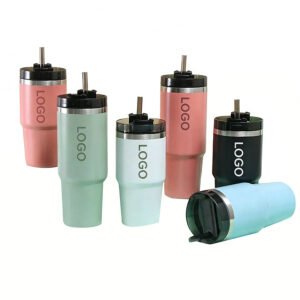
We quote DDP by default because most of our clients are marketing, HR or procurement teams who want a landed number they can put straight into a budget. We also consolidate multi-product orders into one shipment — if you are buying apparel, drinkware and notebooks for the same campaign, they travel together and arrive together, on one invoice.
If you have your own forwarder, tell us at enquiry stage and we will quote FOB instead. Either way, get the term in writing before you compare prices.
Transit time varies by method: express courier is typically 5–10 days door to door; sea freight is 25–40 days but far cheaper per kilo on heavy shipments like drinkware. Full timings are in MOQ, Samples and Lead Times, and shipping terms are set out in the Terms & Conditions.
Not sure which term your order should use? Tell us the destination, the deadline and the product list, and we will quote both ways so you can compare landed cost. Send the brief.