“Put our logo on it” is not a specification. The method you choose decides how the logo looks, how it feels in the hand, how it survives washing, and what it costs. These are the four methods we run most often, and how to choose between them.
1. Screen printing — the volume workhorse
Ink is pushed through a mesh screen onto the surface, one colour at a time, then cured with heat. Each colour needs its own screen.
- Looks: flat, saturated, slightly raised. Excellent for bold marks and solid shapes.
- Durability: very good. Properly cured plastisol on fabric survives dozens of washes; on metal and plastic it is hard-wearing.
- Best for: T-shirts, tote bags, workwear, flat surfaces, runs from roughly 50 pieces upward.
- Watch out for: cost per colour, and fine gradients or photographs, which screen printing reproduces poorly.
2. Heat transfer — full colour without screens
Your artwork is printed onto a transfer film and heat-pressed onto the product. Because there are no screens, the cost per colour is effectively zero.
- Looks: photographic gradients, fine detail and unlimited colours are all achievable.
- Durability: good, with a caveat — a transfer sits as a layer on the surface. On stretchy technical fabrics, or with repeated high-heat washing, it can eventually crack or lift. Care labelling matters.
- Best for: short runs, multi-colour logos, photo imagery, personalised names and numbers.
- Watch out for: a slightly plastic hand-feel on dark garments, where the transfer needs an opaque base.
3. Embroidery — the premium standard
Thread is stitched directly into the fabric. 3D puff embroidery adds a foam underlay so the design stands proud of the surface.
- Looks: textured, substantial, reads as quality. 3D puff adds real depth — it is the standard finish on premium caps.
- Durability: the best of the four. The thread is part of the garment; it does not peel or crack.
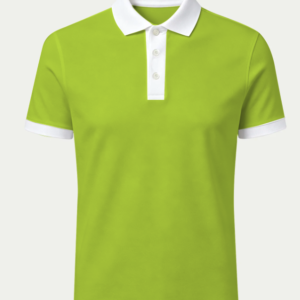
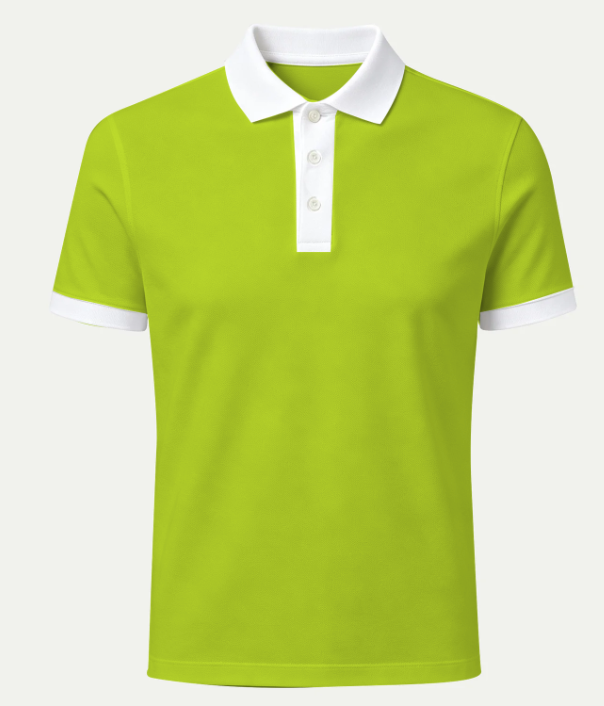
- Best for: polo shirts, caps, jackets, workwear, uniforms — anything that gets washed often.
- Watch out for: very small text and fine detail, which stitch out poorly, and very stretchy or thin fabrics where dense stitching puckers.
4. RF (high-frequency) welding — for PVC and coated materials
High-frequency energy fuses thermoplastic layers together under a shaped die. It bonds rather than prints.
- Looks: a clean embossed or welded relief in the material itself. Very high-end.
- Durability: excellent — the mark is the material, so there is no ink layer to wear off.
- Best for: PVC and PU items, bags, pouches, promotional items with coated surfaces.
- Watch out for: it only works on materials that respond to RF energy, and it needs a die, so it suits repeat orders rather than one-offs.
5. And for hard surfaces?
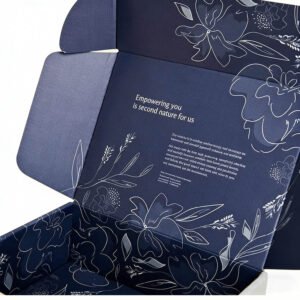
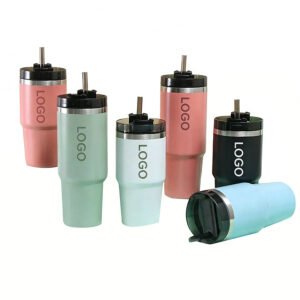
Neither printing nor stitching applies. On metal trophies and crystal awards we laser-engrave or etch, which removes material rather than adding it — permanent, and the standard for awards. On packaging we use hot foil stamping (metallic foil pressed with a heated die), optionally combined with embossing for raised relief, plus spot UV and lamination. These are tooling-based, so they suit packaging runs rather than single items.
6. So which should I choose?
Work through four questions in order:
- What is it made of? Fabric → embroidery or screen print. Coated PVC/PU → RF welding. Metal or crystal → engraving. Paperboard → foil or print.
- How long must it last? Workwear washed weekly → embroidery. A one-day event giveaway → screen print is fine.
- What does the artwork demand? Photographic or gradient → heat transfer or digital. Solid marks → screen print or embroidery.
- How many? Under about 50 with many colours → heat transfer. Above a few hundred with one or two colours → screen print.
7. What should I send to get this right first time?
Vector artwork — AI, EPS, SVG or a high-resolution PDF — with fonts converted to outlines, plus the Pantone references if colour accuracy matters. Vector files scale to any size without degradation and let us cut clean screens and stitch files. A PNG pulled from a website is workable but usually needs redrawing, which adds time.
Full specifications, including bleed and safe-area requirements, are in our Artwork Guidelines.
Still choosing? Send the product and your logo and we will recommend a method — with a free digital proof so you can see it before anything is made. Start from the enquiry form or browse the catalogue.